MAYOR OF NEW ALBANY EXPRESSES CONCERNS OVER NEW “MUST” TASKFORCE CREATED AFTER SENATE ENROLLED ACT 1

MAYOR OF NEW ALBANY EXPRESSES CONCERNS OVER NEW “MUST” TASKFORCE CREATED AFTER SENATE ENROLLED ACT 1

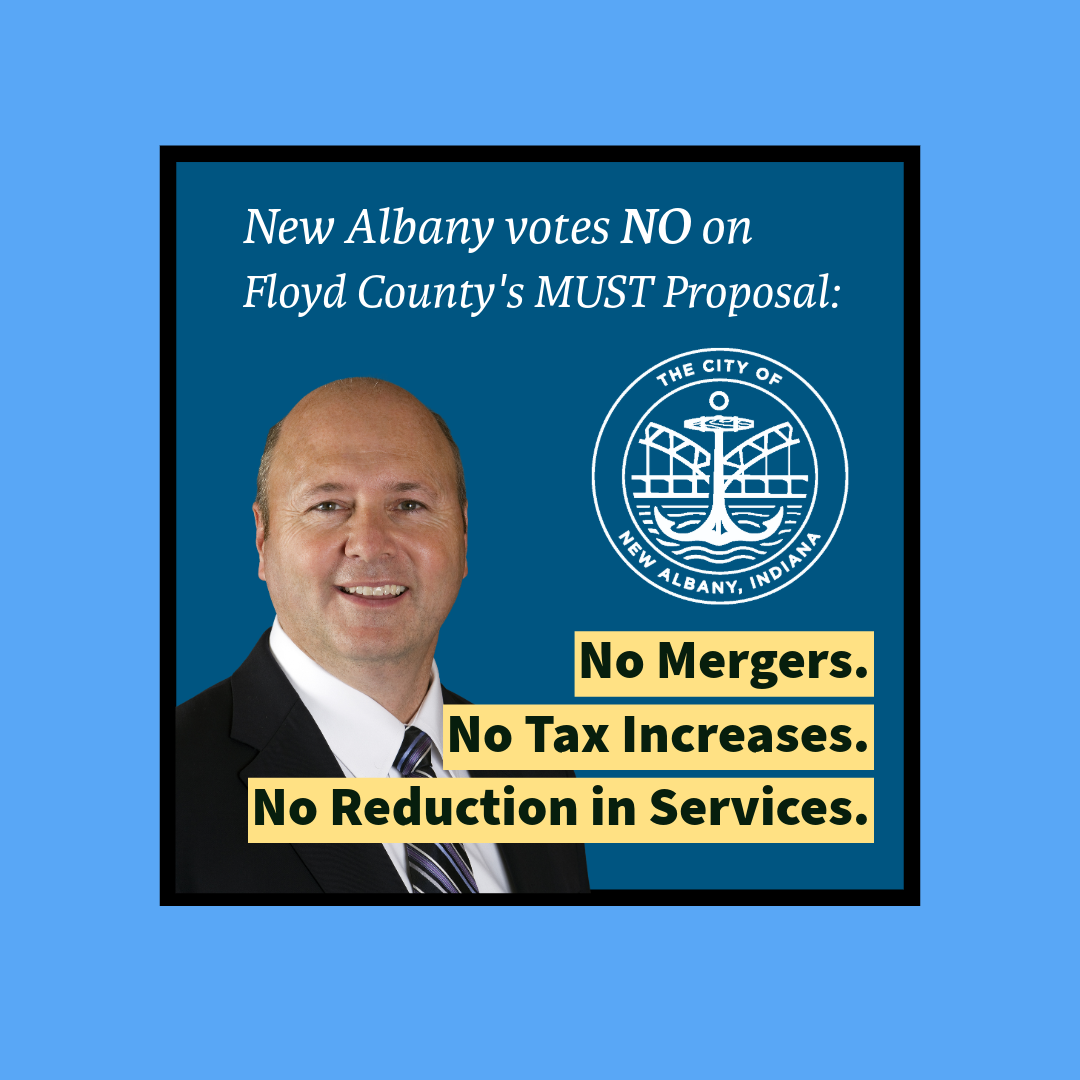
The City of New Albany has concerns about the new Municipal Unit Strategic Taskforce (MUST), established shortly after the passage of Senate Enrolled Act 1 (SEA 1).

Under previous law, local income tax distributions were determined through formulas established by the State of Indiana. New laws passed by state government replace that process by requiring local governments to negotiate certain local income tax structures through a county-level taskforce.

Mayor Gahan said the City is particularly concerned that these discussions will rely on financial information from Floyd County government, whose most recent audit by the Indiana State Board of Accounts identified significant financial reporting issues, including an approximate $45 million variance between balances reported by the Floyd County Treasurer and Floyd County Auditor (found on page 9 and 14 of Floyd County’s 2025 State Board of Accounts Supplemental Audit).

"Before any decisions are made that could impact taxpayers or local government services, we need confidence that the financial information being used is accurate," said Mayor Jeff Gahan. "When the State Board of Accounts identifies discrepancies of this magnitude in Floyd County Government, it raises legitimate concerns that should be addressed before any changes are considered.”

Local income tax revenues are a critical funding source for city services, particularly public safety. In New Albany, the majority of these funds go directly to support police officers, firefighters, emergency response, and other essential city services.

The MUST Taskforce requires unanimous agreement among participating units before recommendations can move forward, and so the City of New Albany intends to carefully evaluate any proposal brought before the taskforce.

"As requested, the City Controller will attend the initial meeting to gather information and better understand the process," Mayor Gahan said. "However, New Albany will not support any proposal that reduces the resources needed to maintain the high level of police, fire, and emergency services our residents expect and deserve."

Mayor Gahan also expressed broader concerns about the implementation of SEA 1 and its potential effects on local governments across Indiana.

"Our first responsibility is keep New Albany residents safe. This program from state government directly jeopardizes that. As this new process moves forward, we will continue to be a strong voice for New Albany taxpayers as well as for the resources needed to keep our city healthy and vibrant," said Mayor Jeff Gahan. “The City has worked very hard over the last 15 years to keep our budgets balanced and our infrastructure in good repair. We should not be penalized for the conduct or performance of other government entities that have not done the same.”

NEW ALBANY CALLS SPECIAL MEETING ON DATA CENTERS:

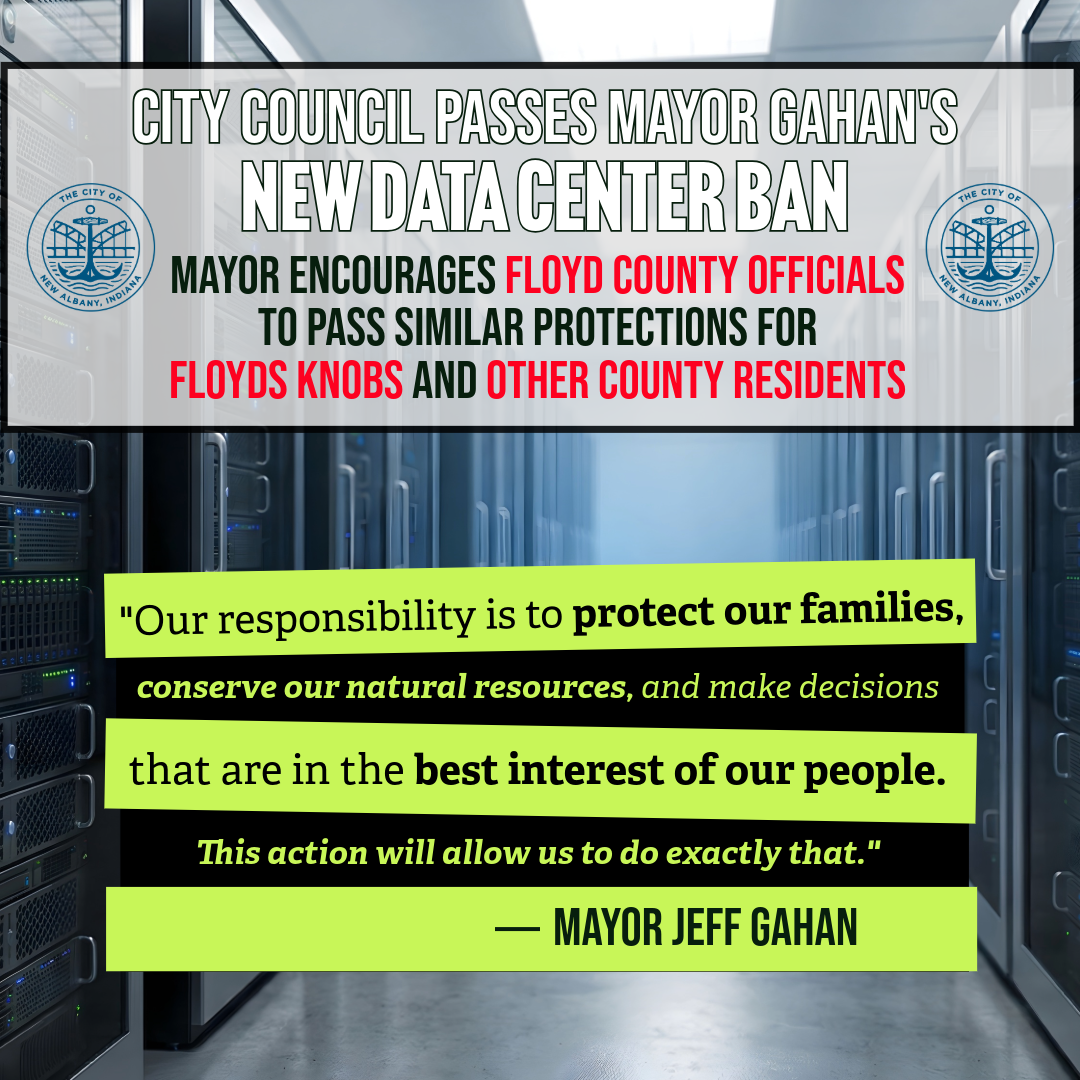
In early June, Mayor Jeff Gahan called for a moratorium on data center construction within the City of New Albany. The proposed ordinance would pause new data center development for up to one year, allowing the City time to study potential impacts on infrastructure, utilities, environmental resources, noise, and other community considerations.

To support that effort, multiple City departments and boards have begun reviewing the issue and gathering public input.

Last week, the New Albany City Council took its first step by referring the proposed ordinance to committee for further review. The Council held its first committee meeting this afternoon, and the proposal remains on track for consideration by the full Council in July.

Additionally, the New Albany City Plan Commission has scheduled a Special Meeting and Public Hearing on Tuesday, June 23, at 5:30 p.m. The hearing will provide residents an opportunity to share their thoughts on data center development and the proposed moratorium. As the body responsible for recommending development standards and helping shape the City’s new zoning ordinance, the Plan Commission is seeking public feedback to help guide future zoning regulations related to data centers.

“We encourage residents to make their voices heard throughout this process,” stated Mayor Jeff Gahan. “The upcoming public hearing is one opportunity to provide input, and there will be additional opportunities for public comment as this proposal continues through the review process before a final vote by the City Council.”

PRESSING PAUSE ON DATA CENTERS: Mayor Gahan Asks New Albany Council for Moratorium on New Data Center Development

PRESSING PAUSE ON DATA CENTERS: Mayor Gahan Asks New Albany Council for Moratorium on New Data Center Development

This week, Mayor Gahan is urging the New Albany Common Council to establish a moratorium on the construction of new data centers within the City and its two-mile fringe planning jurisdiction.

If approved, the moratorium would remain in effect for one year while City officials complete a comprehensive review of how data center development could impact local infrastructure, land use planning, utility costs, environmental effects, and the long-term goals outlined in New Albany's recently adopted Comprehensive Plan.

The proposed ordinance would provide City leaders, planning professionals, and the public with the opportunity to evaluate appropriate standards and regulations before this emerging form of development occurs locally.

"New Albany has a limited amount of land, and this pause allows us to thoroughly examine the impacts of data centers,” said Mayor Jeff Gahan.

City Councilperson Elaine Murphy has agreed to sponsor the ordinance that has been drafted, and had the following comments: “Before a data center can be built in our city, we would first need to know the economic and environmental impacts. Big corporations are benefiting from tax exemptions for their data centers and they are profiting hand over fist. We need to be watchful and make sure there are no negative consequences for the citizens of New Albany.”

During the moratorium period, the City's Department of Planning and Zoning and Plan Commission would be asked to study the potential effects of data centers on public infrastructure, municipal services, economic development, utility costs, environmental effects, and neighborhood character. The findings would help inform updates to the City's zoning ordinance and establish clear expectations for any future proposals.

Data centers have become increasingly common in Indiana as demand for cloud computing, digital services, and artificial intelligence technologies continues to grow. The “Big Beautiful Bill” has also allocated many dollars and resources to expand data centers throughout rural and urban areas in Indiana. These facilities can require significant infrastructure investments, including enhanced electrical capacity, backup power systems, cooling equipment, and other specialized support systems.

City officials emphasized that the proposed moratorium is intended to ensure New Albany is proactive rather than reactive when considering these types of projects.

"By studying this issue now, we can keep our residents informed about the potential benefits and pitfalls of the Great Data Center Expansion in and around our River City,” stated Mayor Gahan. “I would hope all elected county officials and state representatives would take the same action and stand up for Hoosier residents, especially those who live in Southern Indiana.”

The ordinance will be considered by the New Albany Common Council at an upcoming public meeting.

Finding the Right Balance - New Albany Works to Increase Home Ownership

🏠 FINDING THE RIGHT BALANCE - New Albany Works to Increase Home Ownership

At tonight’s Plan Commission meeting, the board will hear proposals for building 80 new homes. Combined with the 230 homes already under construction throughout the city, this makes more than 310 new homes being developed in New Albany right now for single-family ownership.

“We believe homeownership is one of the strongest tools for building stable neighborhoods and stronger communities. When families are able to own a home, they are more likely to invest in their neighborhood, support local schools and businesses, and build long-term roots in the community. Our goal is to create more opportunities for residents to achieve that stability while continuing to improve housing options across New Albany,” stated Mayor Jeff Gahan.

The most recent housing study identified a growing shortage of single-family homes available across communities both in New Albany and nationwide. In response, New Albany has worked proactively to encourage new housing construction and create pathways to homeownership for working families, and the city is committed to finding more ways to keep up that progress.

Currently, approximately 45.5% of households in New Albany are renter-occupied, compared to a 54.5% homeownership rate. In the year 2000, home ownership rates in New Albany were nearly 60%, and city officials have emphasized the importance of creating more opportunities for long-term homeownership and neighborhood stability so that we can achieve those numbers again.

Comparison to Other Indiana Communities

New Albany’s homeownership rate of 54.5% is low compared to other cities, particularly its local peers (see attached chart for more details). The gap between the city’s homeownership rate and its share of single-family housing (70.3%) indicates that many single-family homes are rented.

To help address this imbalance, the City enacted an apartment moratorium a little over a year ago that paused construction on large big-box style apartments that have crept up all over the region. Additionally, the city has pursued policies encouraging single-family home construction while also implementing programs that support first-time homebuyers and existing homeowners, including:

  • Down-payment assistance programs

  • Emergency home repair assistance

  • Neighborhood investment initiatives

City of New Albany Expanding Parks Options

At today’s New Albany Redevelopment Commission, the board voted in favor of moving two major developments ahead.

First is the addition of expanded trails along the western portion of the New Albany Shoreline. The site sits on the former QRS Recycling Center, and the site has been undergoing cleanup and preparation for future greenspace. This addition would add numerous trails along the Riverfront, as well as a new Mountain Bike Trail.

The board also voted to move forward the conversion of turf fields at Silver Street Park (SSP). SSP is one of the premier parks in the area, hosting numerous leagues, team practices, and events. Currently, the site hosts multiple grass fields, but this limits the amount of days that events, games, and practices can be hosted outdoors at the facility.

The addition of turf fields will greatly expand the number of days for outdoor programming (as much as 190 additional days per year!), as well as significantly reduced maintenance costs and time. 

“These improvements in health and wellness reflect our dedication to New Albany residents,” stated Mayor Jeff Gahan. “Improvements like these lay the groundwork for a more vibrant, healthy community, through expanded leagues and programming and more opportunities to improve your health and relax along the Shoreline.”